Paddy (Rice) is the staple food for more than half of India’s population and a cornerstone of our agricultural economy. From the fertile plains of Punjab to the coastal belts of Andhra Pradesh and the river valleys of West Bengal, paddy cultivation is a way of life. However, rice is also one of the most labour-intensive and water-demanding crops. To remain profitable in an era of rising costs and labour shortages, mechanization is no longer optional—it is essential.
Bhansali Agrotech, with 25+ years of expertise in manufacturing high-performance farm machinery, offers a specialized range of implements designed specifically for the unique challenges of paddy farming. In this guide, we explore the best tools to maximize your rice yields while minimizing effort and expense.
The Unique Challenges of Paddy Farming
Unlike wheat or maize, paddy requires a unique soil environment. The most critical stage is “puddling”—the process of churning the soil in standing water to create an impervious layer that prevents water from seeping away. This requires machinery that can work in wet, muddy, and often corrosive conditions without breaking down.
Detailed Explanation: The Paddy Mechanization Cycle
1. Primary Tillage: Preparing the Foundation
Before the fields are flooded, primary tillage is necessary to break the soil and incorporate the residue from the previous crop.
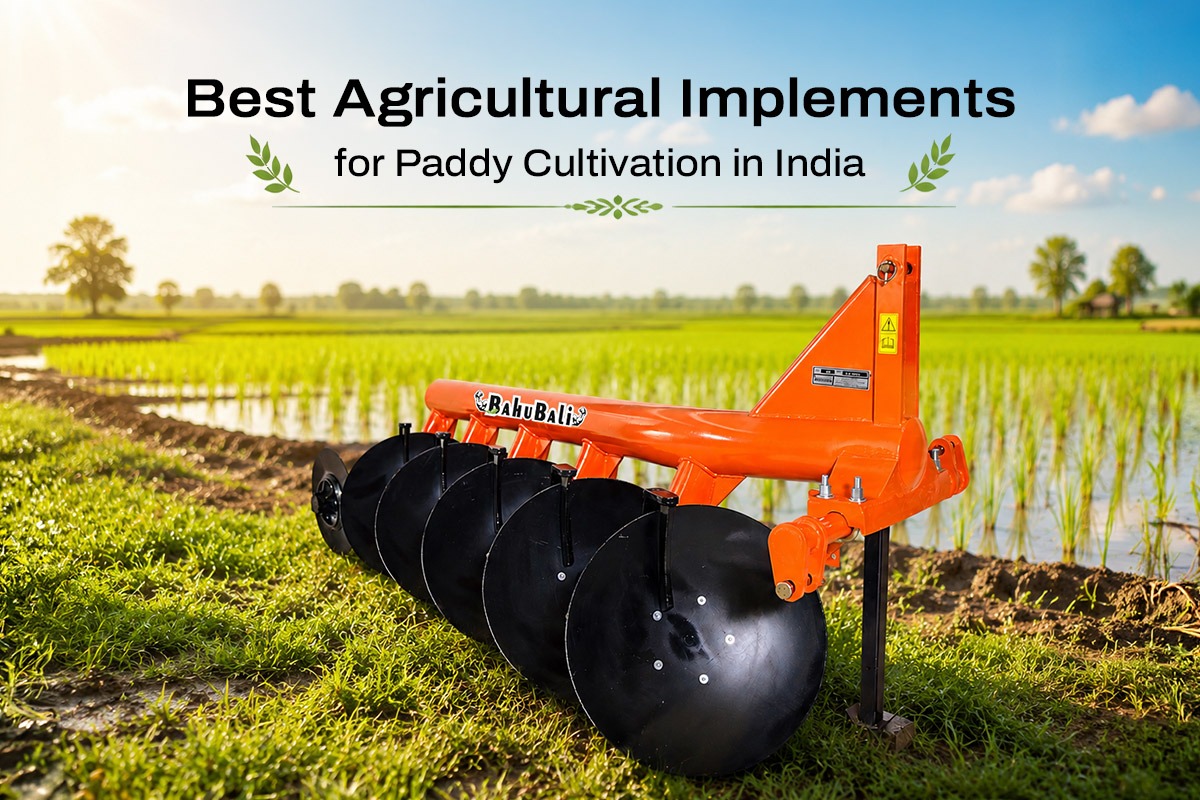
* The Tool: Disc Plough or MB Plough.
* Why: These implements turn the soil over, burying weeds and old stubble deep underground where they can decompose and add nutrients back to the soil. Bhansali Agrotech’s ploughs are built with high-clearance frames to prevent clogging even in heavy residue.
2. Puddling: The Most Critical Step
Puddling is what defines paddy cultivation. It creates the soft, muddy bed required for transplanting and ensures the field can hold water throughout the growing season.
* The Tool: Paddy Rotavator (equipped with specialized blades).
* Why: A standard rotavator might struggle in standing water, but a Bhansali Agrotech Paddy Rotavator is designed with superior sealing systems to prevent muddy water from entering the gearbox and bearings. The specialized blades are shaped to churn the mud perfectly without creating a “hardpan” that is too deep for the young rice roots.
3. Levelling: Ensuring Uniform Water Depth
In a rice field, even a few inches of height difference can lead to uneven water distribution—some parts of the field will be dry while others are too deep.
* The Tool: Leveler or Laser Land Leveler.
* Why: Precise levelling saves up to 20-25% of irrigation water and ensures that fertilizers are distributed evenly across the entire field. This leads to uniform crop maturity and easier harvesting.
4. Sowing and Transplanting
While manual transplanting is still common, more farmers are moving toward Direct Seeded Rice (DSR) or mechanical transplanters to save on labour.
* The Tool: Seed Drill (for DSR).
* Why: Direct seeding with a Bhansali Agrotech Seed Drill reduces the water requirement by nearly 30% and eliminates the need for a nursery, significantly lowering the cost of cultivation.
5. Transport and Logistics
Once the harvest is in, moving heavy, wet paddy from the field to the market or storage is a massive task.
* The Tool: Agricultural Trailer (Tipping Type).
* Why: Our heavy-duty tipping trailers, sold under the BAHUBALI brand, are designed to handle the weight of wet paddy. The hydraulic tipping mechanism makes unloading fast and easy, reducing the turnaround time during the busy harvest season.
Benefits for Farmers: Why Mechanize Your Paddy Farm?
- Water Conservation: Proper puddling and levelling ensure that every drop of water is used efficiently, which is critical in rain-fed areas.
- Labour Independence: You no longer have to wait for transplanting teams to arrive. With the right machinery, you can control your own farming schedule.
- Improved Soil Structure: Modern implements help in better residue management, leading to improved soil health over time.
- Cost Reduction: While the initial investment in a rotavator or plough is significant, the per-acre cost of cultivation drops by 40-50% compared to manual methods.
How to Choose the Right Paddy Equipment
When selecting machinery for rice farming, look for:
1. Water-Proofing: Ensure the rotavator has multi-lip oil seals to protect the internal components from mud.
2. Corrosion Resistance: Paddy fields are wet. Bhansali Agrotech uses high-quality powder coating and anti-corrosive treatments to ensure our machines don’t rust.
3. Tractor Compatibility: Make sure your tractor is fitted with “paddy tires” or “cage wheels” to provide traction in the mud while pulling the implement.
Why Bhansali Agrotech?
Bhansali Agrotech is a trusted name in 48+ countries because we understand the “ground reality” of farming. Our paddy-specific implements are:
* Durable: Built to withstand the harsh, wet environment of rice fields.
* Efficient: Designed to provide maximum “churn” with minimum fuel consumption.
* Global Standard: We bring international engineering to the Indian paddy farmer, ensuring you get the same quality as farmers in the world’s leading rice-producing nations.
Frequently Asked Questions (FAQs)
1. Can I use the same rotavator for wheat and paddy?
Yes, but you may need to change the blades or ensure the seals are high-quality. Bhansali Agrotech offers multi-purpose rotavators that excel in both dry and wet conditions.
2. How does a laser leveler help in paddy?
A laser leveler ensures the field is perfectly flat. This means you need less water to cover the entire field, and the rice plants grow at a uniform height, which is essential for mechanical harvesting.
3. What is the advantage of a tipping trailer for paddy?
Paddy is often sold at government procurement centres (Mandis) where speed is essential. A tipping trailer allows you to unload tons of produce in seconds, rather than hours of manual shovelling.
4. Does Bhansali Agrotech offer implements for small paddy farmers?
Absolutely. We have a range of implements designed for tractors starting from 25 HP, making mechanization accessible to farmers with smaller landholdings.
5. How do I maintain my equipment after the paddy season?
After the season, it is vital to wash off all mud, grease the moving parts, and store the implement in a dry place. This prevents rust and ensures the machine is ready for the next season.
Conclusion
Paddy cultivation is evolving. To meet the demands of a growing population and a changing climate, farmers must embrace technology. Bhansali Agrotech is proud to provide the “iron backbone” for India’s rice farmers. From the first ploughing to the final transport, our implements are designed to make your work easier and your farm more profitable.
Take the first step toward a bumper paddy harvest!
Contact Bhansali Agrotech today to learn more about our specialized paddy rotavators, ploughs, and trailers. Our experts are ready to help you choose the right tools for your farm.