In the pursuit of higher yields, Indian farmers often focus on the things they can see: the quality of the seeds, the colour of the leaves, and the amount of fertilizer applied. However, the biggest obstacle to a bumper harvest often lies hidden beneath the surface, invisible to the naked eye. This obstacle is the “hardpan”—a compacted layer of soil that acts like a concrete floor, preventing roots from growing deep and water from soaking in.
At Bhansali Agrotech, with over 25 years of experience in agricultural engineering, we believe that Sub Soiling is the single most underrated practice that can transform the productivity of Indian farms. In this article, we’ll dive deep into why breaking this invisible barrier is the key to unlocking your farm’s true potential.
What is a Hardpan and How Does it Form?
A hardpan is a dense, compacted layer of soil that forms about 10 to 18 inches below the surface. In India, this layer is primarily caused by two things:
1. Continuous Shallow Tillage: Using only cultivators or rotavators year after year only loosens the top 6-8 inches of soil. The pressure from the tractor tires and the implement itself actually compacts the soil just below that depth.
2. Heavy Machinery Traffic: The weight of tractors and trailers passing over the same field repeatedly squeezes the air out of the soil, creating a solid, impermeable layer.
Detailed Explanation: How Sub Soiling Works
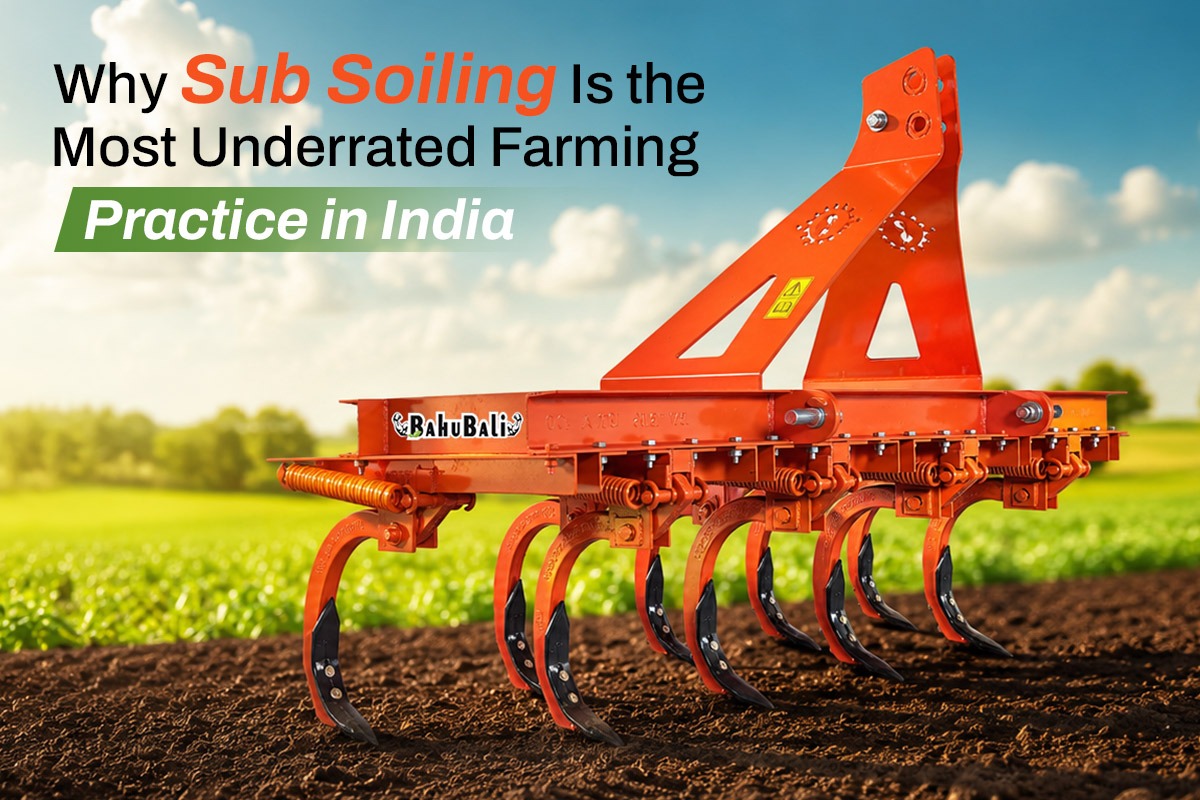
Sub soiling is a form of deep tillage that reaches depths of 18 to 24 inches—far beyond the reach of a standard plough or cultivator. A Sub Soiler consists of one or more heavy-duty shanks that slice through the earth, shattering the hardpan without turning the soil over.
Unlike a disc plough which flips the soil, the sub soiler leaves the fertile topsoil in place while creating deep “fissures” or cracks in the subsoil. This allows:
* Deep Root Penetration: Crops like Cotton, Sugarcane, and Pigeon Pea (Tur) have deep taproots. If they hit a hardpan, they stop growing or grow sideways, leading to stunted plants. Sub soiling gives them a clear path to the nutrients and water stored deep in the earth.
* Vertical Drainage: During heavy monsoon rains, a hardpan causes water to stagnate on the surface, which can rot the roots of your crop. Sub soiling allows excess water to drain vertically into the deep layers of the earth.
Benefits for Farmers: Why Your Yield Will Thank You
The impact of sub soiling is often dramatic and long-lasting:
- Increased Drought Resilience: By allowing roots to go deeper, your crops can access moisture that stays in the subsoil long after the topsoil has dried out. This can save your crop during a 15-day dry spell in the middle of the monsoon.
- Better Nutrient Uptake: Many nutrients leach down into the subsoil over time. Without sub soiling, these nutrients are “locked away” from your plants. Sub soiling unlocks this hidden fertilizer bank.
- Improved Soil Health: Breaking the compaction allows air (oxygen) to reach deep into the soil. This encourages the growth of beneficial earthworms and microbes that keep your soil alive and fertile.
- Reduced Runoff and Erosion: When water can soak into the ground, it doesn’t run off the surface. This means your valuable topsoil stays on your farm instead of being washed away into the local stream.
How to Choose the Right Sub Soiler
Not all sub soilers are created equal. When choosing one for your farm, consider:
* Number of Shanks: A single-shank sub soiler is ideal for tractors in the 35-45 HP range. For 55+ HP tractors, you can use a 2 or 3-shank model to cover the field faster.
* Build Quality: Sub soiling is the most demanding task for a tractor and an implement. Bhansali Agrotech’s sub soilers are built with reinforced heavy-duty frames and high-carbon steel shanks to ensure they don’t bend or break in the toughest conditions.
* Depth Adjustment: Look for an implement that allows you to easily adjust the depth based on where your hardpan layer is located.
Why Bhansali Agrotech?
Bhansali Agrotech has been a pioneer in introducing deep tillage solutions to the Indian market. Our sub soilers are engineered for the “BAHUBALI” strength that Indian farmers need.
* Export-Grade Durability: We export our deep tillage equipment to 48+ countries, where they are tested in some of the world’s most difficult soil conditions.
* Precision Design: Our shanks are designed to provide maximum “shatter” with minimum draft (pulling force), saving you fuel while doing the job effectively.
* 25 Years of Trust: When you buy from Bhansali Agrotech, you are buying a legacy of reliability and performance.
Frequently Asked Questions (FAQs)
1. How often should I sub soil my field?
In most cases, sub soiling once every 2 to 3 years is sufficient. You don’t need to do it every season.
2. Does sub soiling require a very powerful tractor?
A single-shank sub soiler can be operated by a 40-45 HP tractor. However, the slower you go and the deeper you penetrate, the better the shattering effect will be.
3. What is the best time for sub soiling?
The best time is during the summer (May-June) when the soil is dry. Dry soil “shatters” much better than wet soil, which just gets sliced.
4. Will sub soiling bring stones to the surface?
Because the sub soiler doesn’t flip the soil, it brings fewer stones to the surface than a disc plough. However, it will loosen any large rocks hidden in the subsoil.
5. Is sub soiling expensive?
While it uses more fuel than shallow tillage, the increase in yield (often 15-20%) and the long-term improvement in soil health make it one of the most profitable investments you can make.
Conclusion
If you feel like you’ve hit a “ceiling” with your crop yields, look down. The answer might be right under your feet. Breaking the hardpan through sub soiling is a fundamental step in modern, scientific farming. It’s time to stop farming just the surface and start utilizing the full depth of your land.
Ready to unlock your soil’s potential?
Contact Bhansali Agrotech today to learn more about our heavy-duty sub soilers. Let us help you build a deeper, stronger foundation for your farm’s success.