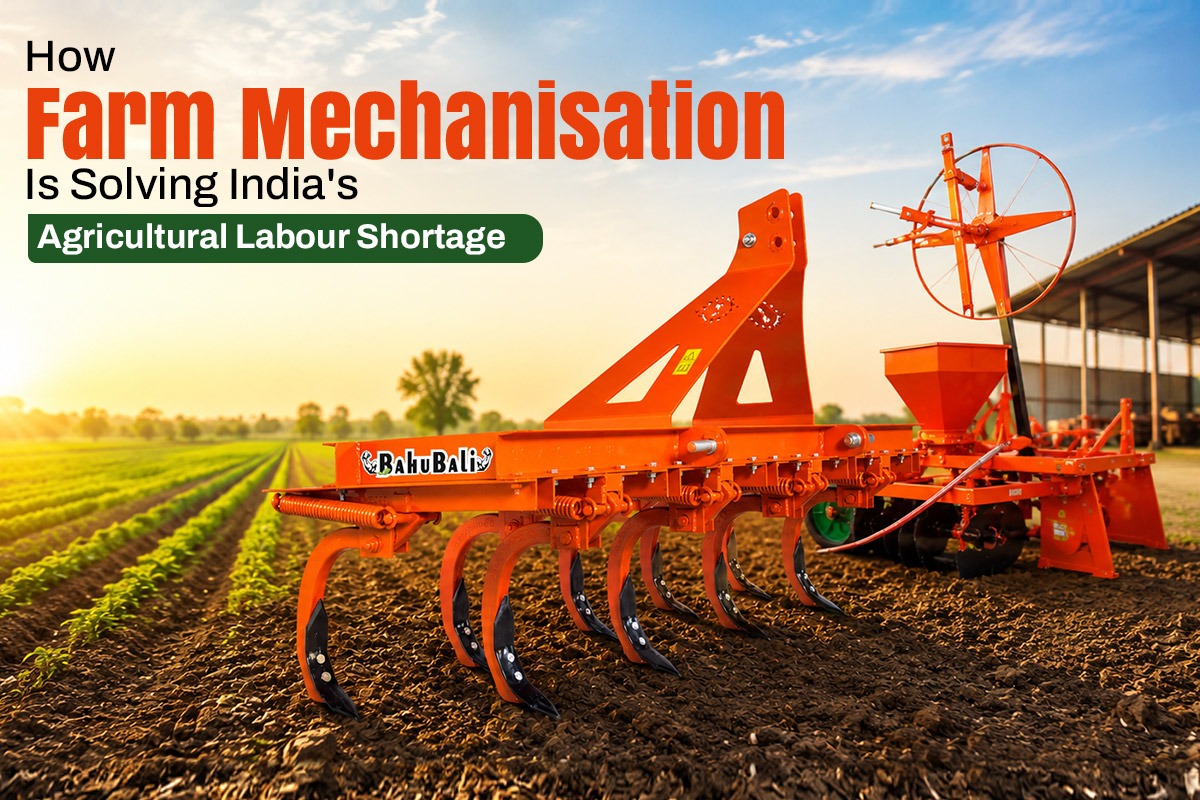
In the heart of India’s rural landscape, a silent revolution is unfolding. For generations, the rhythm of Indian agriculture was dictated by the availability of manual labour—hands to sow, hands to weed, and hands to harvest. However, the modern Indian farmer faces a daunting challenge: a shrinking workforce. As younger generations migrate to urban centres in search of industrial and service-sector jobs, the agricultural sector is grappling with a severe labour shortage. This is where farm mechanisation steps in, not just as a convenience, but as a survival strategy for the future of Indian farming.
Bhansali Agrotech, with over 25 years of experience in manufacturing high-quality agricultural implements, has been at the forefront of this transformation. By providing robust, tractor-drawn equipment, we are helping farmers bridge the gap left by manual labour, ensuring that productivity remains high even when hands are few.
The Growing Labour Crisis in Indian Agriculture
The shortage of agricultural labour in India is a complex issue driven by several factors. The Mahatma Gandhi National Rural Employment Guarantee Act (MGNREGA) has provided alternative employment opportunities within villages, often at higher wages than traditional farm work. Additionally, the lure of city life and the perception of farming as backbreaking, low-return work have driven the youth away from the fields.
This shortage is most acutely felt during peak seasons—sowing and harvesting. When the rains arrive, every farmer needs labour at the same time. This surge in demand leads to skyrocketing wages and, worse, delays in critical operations. A delay of even a few days in sowing or harvesting can lead to significant yield losses, directly impacting a farmer’s bottom line.
How Farm Mechanisation Fills the Gap
Farm mechanisation refers to the use of mechanical technology—from simple hand tools to complex tractor-drawn machinery—to perform agricultural operations. In the context of the current labour crisis, modern implements like Rotavators, Cultivators, and Seed Drills are game-changers.
1. Speed and Timeliness
One of the greatest benefits of mechanisation is the speed at which tasks can be completed. A tractor-mounted Seed Drill can sow an entire field in a fraction of the time it would take a team of labourers. This ensures that crops are planted at the optimal time, maximizing the use of soil moisture and seasonal weather patterns.
2. Precision and Efficiency
Manual labour is prone to inconsistency. Seeds might be sown too deep or too shallow; fertilisers might be applied unevenly. Mechanical implements provide precision. For instance, a Bhansali Agrotech Seed Drill ensures uniform depth and spacing, leading to better germination and a healthier crop stand.
3. Reduced Physical Drudgery
Farming is physically demanding. Mechanisation takes the “backbreak” out of the work. By using a Cultivator or a Disc Harrow for land preparation, farmers can manage larger areas with significantly less physical effort, making farming a more attractive and sustainable profession for the remaining workforce.
Benefits for Farmers: More Than Just Labour Savings
While solving the labour shortage is the primary driver, the benefits of farm mechanisation extend much further:
- Cost Savings: While the initial investment in machinery might seem high, the long-term savings on labour wages and the reduction in wasted seeds and fertilisers make it a highly profitable move.
- Increased Productivity: Mechanised farms often see higher yields because operations are done more precisely and on time.
- Better Soil Health: Implements like the Sub Soiler help in breaking the hardpan layer of the soil, improving water retention and root penetration, which is often difficult to achieve with manual tools.
- Multi-Cropping Opportunities: Because mechanisation speeds up the harvest of one crop and the preparation for the next, farmers can often fit an extra crop cycle into the year.
How to Choose the Right Equipment for Your Farm
Choosing the right machinery is critical to seeing a return on investment. Farmers should consider:
- Tractor Horsepower (HP): Ensure the implement you buy is compatible with your tractor’s power.
- Soil Type: Heavy clay soils might require a Disc Plough, while lighter soils might be better served by a Cultivator.
- Farm Size: For smaller holdings, versatile tools like the Rotavator are excellent, while larger farms might benefit from specialized trailers and high-capacity seed drills.
- Crop Type: Different crops have different needs. Sugarcane requires ridgers and infielders, while wheat needs precision seed drills.
Why Bhansali Agrotech?
With a legacy of over two decades, Bhansali Agrotech has earned its reputation as a global leader in agricultural machinery. Our “BAHUBALI” brand of implements is a household name among progressive farmers.
- Global Quality: We export to more than 48 countries, meaning our products meet international standards of durability and performance.
- Innovation: We continuously update our designs to meet the evolving needs of the modern farmer.
- Durability: Our implements are built to withstand the toughest Indian soil conditions.
- Support: With an extensive network of dealers and distributors, we ensure that our customers always have access to parts and service.
Frequently Asked Questions (FAQs)
1. Is farm mechanisation only for large farmers?
No. While large farms benefit significantly, small and marginal farmers can also benefit through custom hiring centres or by investing in versatile, multi-purpose implements like cultivators.
2. Does using heavy machinery damage the soil?
When used correctly, machinery actually improves soil health. For example, a sub soiler breaks up compacted layers, and a rotavator helps incorporate organic matter back into the soil.
3. How much can I save on labour by using a tractor implement?
On average, mechanisation can reduce labour requirements by 60-70% for operations like sowing and land preparation, significantly lowering your seasonal expenses.
4. What is the lifespan of a Bhansali Agrotech implement?
With proper maintenance, our implements are designed to last for 10-15 years, making them a one-time investment for a generation of farming.
5. Are these implements compatible with all tractor brands?
Yes, our tractor-drawn equipment is designed to be compatible with all major tractor brands available in India and internationally, provided the HP requirements are met.
Conclusion
The agricultural labour shortage in India is a reality that isn’t going away. However, it doesn’t have to mean the end of profitable farming. By embracing farm mechanisation, Indian farmers can turn this challenge into an opportunity for growth, efficiency, and higher yields. Bhansali Agrotech is proud to be your partner in this journey, providing the tools you need to feed the nation and the world.
Ready to upgrade your farm?
Contact Bhansali Agrotech today to explore our wide range of Rotavators, Cultivators, Trailers, and other high-performance agricultural implements. Let’s build a more productive and profitable future for your farm together.